


.jpg)
How Often Should Solar Panels Be Cleaned ?

Updated: Aug 4
solar panel cleaning solutions since 2012
Solmaks
Designed and Manufactured in Korea, Rep.

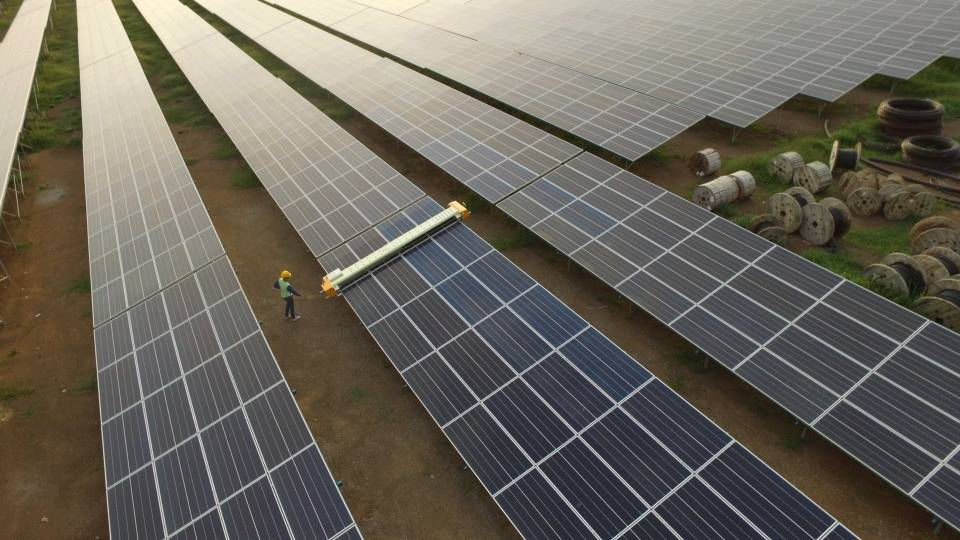
Crawler Solmaks F series
There is no universal cleaning schedule or fixed number of cleaning cycles that applies to every solar power plant.
The optimal timing and frequency of solar panel cleaning depend on various factors, including the level of soiling, surrounding environmental conditions, installation angle, and seasonal factors.
The rate at which solar panels become contaminated varies significantly depending on the surrounding environment and installation conditions.
Soiling can accumulate more quickly in locations such as:
Industrial complexes and areas near factories where dust and airborne particles are generated
Agricultural areas and livestock facilities
Areas near forests where pollen and yellow dust occur during spring
Locations where bird droppings or fallen leaves frequently accumulate
Coastal areas affected by salt particles and sea mist
Areas exposed to traffic-related pollution
Solar plants with low installation angles (for example, below 10 degrees)
On the other hand, solar plants located in areas with sufficient rainfall, higher panel installation angles, and fewer pollution sources may experience slower accumulation of surface contamination.
Therefore, an effective maintenance strategy should be developed based on the specific environmental conditions and installation characteristics of each solar power plant.
Many people assume that rainfall naturally cleans solar panels.
In reality, rain can remove light surface dust and temporary contamination. For newly installed panels, rainfall may appear to completely clean the surface.
However, solar panel soiling is a continuous process.
Contaminants settle on the panels, rain partially removes them, the panels dry, and new contaminants accumulate again. Over time, repeated cycles of accumulation and partial removal can create hardened and persistent soiling.
Especially for solar plants with low installation angles or unfavorable surrounding conditions, long-term accumulated contamination may not be removed even by heavy seasonal rainfall.
Of course, some owners may not feel a strong need for cleaning if their solar plants have favorable environmental conditions, high installation angles, and stable power generation performance.
Rather than following a fixed schedule such as monthly, quarterly, or twice a year cleaning, the most important factor is the actual condition of the solar panels.
Cleaning should be considered when:
Visible contamination has accumulated on the panel surface
Bird droppings or fallen leaves remain for an extended period
Heavy yellow dust or pollen events occur during certain seasons
A decline in power generation compared with normal performance is observed
Regular inspections confirm accumulated soiling
The purpose of solar panel cleaning is not to create additional energy production beyond the original design capability.
Instead, the purpose is to minimize performance losses caused by contamination and maintain the panels as close as possible to their original operating condition.
Solar panel cleaning frequency cannot be determined uniformly for all power plants.
The most efficient approach is to consider multiple factors together:
the degree of panel contamination
surrounding environmental conditions
installation angle
seasonal influences
and long-term operational objectives
This preventive maintenance approach helps maintain stable power generation performance, improve long-term operational efficiency, and protect the overall value of the solar asset.
Solmaks P
solar panel cleaning solutions since 2012
Solmaks
Designed and Manufactured in Korea, Rep.


Comments