


.jpg)
The Value of Solar Panel Cleaning : Beyond Immediate Energy Yield Improvement

Updated: Aug 4
solar panel cleaning solutions since 2012
Solmaks

Solmaks SE
The primary purpose of installing a solar power plant is to generate energy and create economic value for stakeholders. Therefore, power generation efficiency and energy output are considered key performance indicators.
However, opinions regarding the necessity of solar panel cleaning vary significantly depending on the size of the solar plant and, more importantly, the mindset and management approach of the plant owners and operators.
Common viewpoints such as:
“ How much difference can cleaning really make to power generation ? ”
“ Is it worth spending money on cleaning ? ”
“ Won’t rain naturally clean the panels anyway ? ”
reflect a tendency to evaluate panel cleaning only from the perspective of short-term energy yield improvement.
However, judging the value of panel cleaning solely by immediate generation gains—or assuming that cleaning is unnecessary altogether—may overlook the broader value of solar asset management.
Solar panel cleaning should be understood as a part of preventive maintenance: an activity that manages panel conditions, protects equipment performance, and preserves the long-term value of the solar asset.
Some solar plants may experience relatively low levels of contamination because natural rainfall removes a significant amount of surface dust. In contrast, other plants may accumulate persistent contamination due to surrounding conditions and low installation angles, making regular cleaning more valuable.
Since every solar site has different environmental and installation conditions, it is difficult to apply the experience of one plant universally to another. The necessity of cleaning should not be determined through general assumptions, but rather through a comprehensive evaluation of:
surrounding environment
installation conditions
contamination level
operating period
and long-term asset management objectives
Typical locations with higher contamination risks include:
rural and open-field areas
livestock facilities such as cattle farms, poultry farms, and pig farms,
areas near forests
industrial complexes
coastal regions
Potential contaminants include:
dust and soil particles
bird droppings
airborne soil
traffic-related pollutants
salt and sea mist
tree sap
polle,
yellow dust
fallen leaves and organic materials,
coal dust
wood particles
iron and metallic dust
cement dust
and other industrial residues
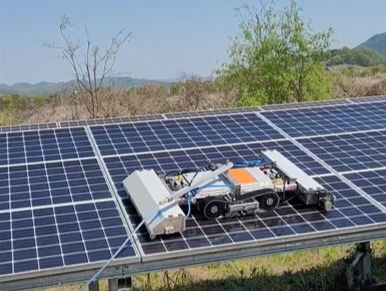
Crawler Solmaks FS
Solar plants with low installation angles often have limited cleaning effects from natural rainfall. Contaminants that accumulate over a long period and become hardened through repeated cycles of rain, drying, and re-deposition are not easily removed even by heavy seasonal rainfall.
Rainfall and actual panel cleanliness are not the same thing.
The important questions are :
What type of contaminants have accumulated ?
How long have they been present?
What is the installation angle of the panels ?
These factors determine whether natural rainfall is sufficient or whether professional cleaning is required.
During the first three to four years after installation, solar plant owners may not feel a strong need for panel cleaning.
At this stage :
rainfall may still remove surface dust relatively effectively,
visible contamination may not appear significant
reduction in power output may not be noticeable
and avoiding cleaning costs may seem economically reasonable
As a result, some owners may conclude that panel cleaning is unnecessary.
However, early operational experience does not necessarily represent the long-term condition of a solar plant.
The process of contamination is gradual.
Over time, these contaminants can transform from simple surface dust into accumulated and hardened soiling.
The challenge is that plant owners may eventually stop noticing the gradual decline. At some point, reduced output may simply become accepted as:
This is one of the hidden risks of insufficient maintenance.
Of course, economic efficiency remains an important consideration.
The question :
is a reasonable and necessary evaluation.
However, the value of cleaning should not be limited to short-term energy recovery.
Regular cleaning can :
prevent performance degradation caused by accumulated soiling
maintain stable operating conditions
support long-term equipment performance
reduce risks associated with neglected maintenance
and preserve the overall value of the solar asset

Solmaks E
We clean our homes when dust accumulates.
We wash our cars when they become dirty.
We clean windows when visibility decreases.
The reason is not only immediate performance improvement, but also proper care and maintenance.
Solar panels should be viewed in the same way.
Regular cleaning is a preventive maintenance activity that helps maintain stable performance and extend the useful life of a long-term investment.
The mindset of:
“Rain will clean the panels by itself.”
often comes from viewing solar panels as equipment that simply produces electricity after installation, rather than as valuable assets requiring continuous management.
Not every solar operator views maintenance in the same way.
Attitudes vary depending on:
plant size
operating period
investment objectives
management strategy
and most importantly, the owner’s approach toward asset management.
Some owners carefully maintain their facilities because they value cleanliness and long-term preservation.
Others may leave the panels untouched unless a clear decrease in generation becomes visible.
Therefore, panel cleaning is not only a technical issue. It is also a reflection of how owners and managers perceive and manage their assets.
Some owners clean panels because they expect improved energy output.
Others clean because they want to maintain their equipment properly.
Some clean because they do not want to neglect a valuable long-term asset.
Improved generation efficiency is not the only reason for solar panel cleaning.
Rather, improved efficiency is often the result of proper asset management.
By maintaining clean and healthy panels, owners can expect better long-term performance, improved reliability, and preservation of asset value.
Solar panel cleaning is not simply a task designed to recover lost energy production. It is a preventive maintenance activity for solar assets designed to operate for decades.
Proper cleaning and maintenance contribute not only to performance recovery but also to long-term reliability, operational stability, and preservation of investment value.

Crawler Solmaks F series
solar panel cleaning solutions since 2012
Solmaks


Comments